


In architecture and interior design, proportion is rarely the most visible element of a project, yet it is often the one that determines its success. Balanced spaces feel intuitive, calm, and coherent because every component relates to the others with intention. Surfaces play a decisive role in this process, acting as visual regulators that help define scale, rhythm, and continuity.
Within this framework, Italian porcelain tiles are not chosen for their decorative impact alone. They are selected for their ability to support projects guided by measure and control, where equilibrium takes precedence over effect. Through dimensional precision, surface consistency, and material restraint, these tiles contribute to environments where proportion becomes a lived experience rather than a theoretical concept.
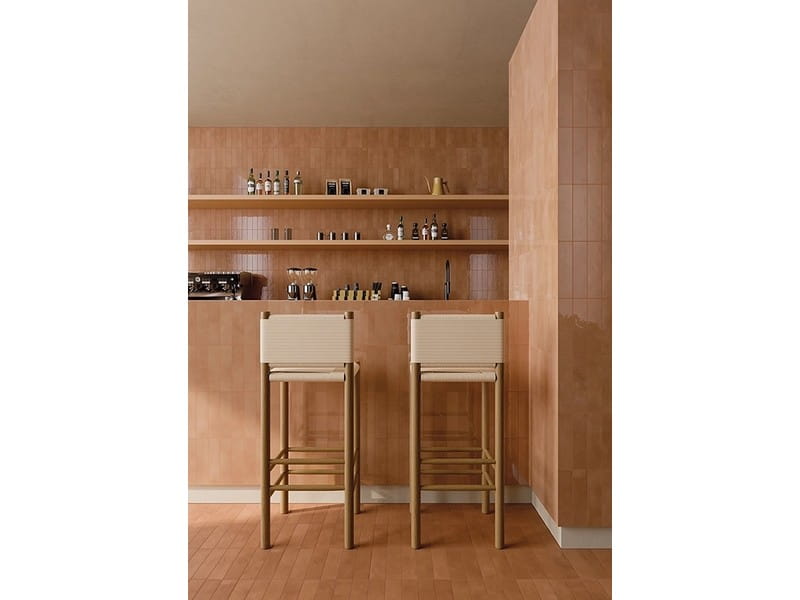
Image credit: Keope
Proportion as the foundation of spatial clarity
Proportion in contemporary design is less about strict mathematical ratios and more about spatial legibility. It governs how rooms relate to one another, how surfaces frame volumes, and how the eye moves through a space. When proportion is well resolved, architecture feels immediately readable, without the need for emphasis or explanation.
Porcelain surfaces contribute to this clarity by establishing visual order. Their dimensional regularity, modular logic, and controlled surface expression help anchor architectural compositions. Floors and walls become reference planes that guide perception, allowing volumes, openings, and furnishings to exist within a coherent spatial system.
Balance achieved through surface continuity
Balance is often achieved not through contrast, but through continuity. When materials are used consistently across floors and walls, spaces gain visual stability and compositional calm. Porcelain tiles are particularly suited to this approach, as they allow for seamless transitions between surfaces without disrupting the spatial narrative.
Continuity does not imply monotony. Instead, it creates a stable framework within which subtle variations can operate. By reducing visual interruptions, continuous surfaces reinforce the proportional relationships between elements, helping interiors feel composed rather than assembled. This approach is especially effective in open-plan environments, where balance depends on cohesion rather than segmentation.
Neutral surfaces and controlled visual rhythm
Neutrality is often misunderstood as a lack of expression. In reality, neutral surfaces require a high level of design control. Color restraint, calibrated textures, and balanced finishes allow surfaces to perform their architectural role without overwhelming the space.
Italian porcelain tiles interpret neutrality through depth rather than flatness. Slight tonal variations, soft material effects, and measured textures introduce rhythm while preserving visual calm.
Light interacts with these surfaces in a controlled way, enhancing proportions instead of fragmenting them. The result is an environment where balance is maintained over time, regardless of changing furnishings or lighting conditions.
Italian porcelain tiles as a material of precision
Precision is essential in projects driven by proportion. Dimensional accuracy, consistency across batches, and reliable performance allow surfaces to function as true design tools. Italian porcelain tiles respond to these requirements with industrial exactness refined by a strong design culture.
Their strength lies not in asserting presence, but in supporting architectural intent. Edges align, surfaces remain stable, and visual coherence is preserved across large areas. This reliability enables architects and designers to work with confidence, knowing that the material will reinforce the project’s balance rather than compromise it.
Designing spaces that age with balance
Projects built on proportion and equilibrium tend to age gracefully. They are not tied to trends or visual statements that demand constant renewal. Instead, they rely on relationships that remain relevant over time.
In this context, Italian porcelain tiles act as a silent infrastructure for space. They provide continuity, precision, and visual stability, allowing architecture to express itself without excess. By supporting balance rather than spectacle, these surfaces contribute to environments designed to endure – spaces where proportion remains the most lasting form of beauty.
Porcelain as a design system: the Ceramiche Keope perspective
Since the mid-1990s, Ceramiche Keope has developed a clear and coherent approach to porcelain surfaces, grounded in Italian manufacturing know-how and shaped by a forward-looking design mindset.
Founded in 1995 and now part of the Concorde Group, the company operates within an industrial framework that values precision, research, and responsibility. Its growth on the international stage reflects a consistent commitment to quality, supported by continuous investment in advanced production technologies and a deep respect for raw materials.
Rather than conceiving porcelain as a standalone product, Ceramiche Keope approaches surface design as a system. In a contemporary architectural landscape where spatial boundaries are increasingly fluid, the company supports designers with coordinated solutions that ensure visual and material consistency across different environments.
Collections are developed to work together through a wide range of formats, thicknesses, and finishes, allowing seamless transitions between indoor and outdoor spaces while maintaining a unified aesthetic language. From residential interiors to commercial, cultural, and hospitality projects, the assortment offers designers a high degree of flexibility and creative control.
Marble-inspired surfaces explore refined veining and depth, while wood-effect collections introduce warmth and tactile balance. Stone, metal, resin, and concrete effects further expand the expressive range, enabling the creation of environments that are coherent, adaptable, and architecturally grounded.
Beyond aesthetics, durability and performance are integral to this design system. Ceramiche Keope porcelain stoneware is conceived to deliver long-term reliability in both private and high-traffic settings, supporting floors and walls with solutions that combine visual clarity and technical strength.
Environmental responsibility is embedded within this industrial vision. The production process is based on efficiency and circularity, with complete recovery of fired scraps and full reuse of water and raw material residues. Approximately 75% of the company’s energy needs are covered through in-house generation, with the remainder sourced exclusively from certified renewable suppliers.
This approach is validated by internationally recognized certifications such as ISO 17889, WELL Building Standard V2, and Declare, confirming a manufacturing model that aligns design quality with responsible, future-oriented practices.
RELATED ARTICLES

Schaumburg HVAC Maintenance Booking Guide
Keeping your heating and cooling system in excellent condition ensures a comfortable home year-round to manage the rising summer heat…

Save Money on HVAC Installation Without Sacrificing Quality
Companies with established presence for their excellence in HVAC installation services…
From Cozy Bungalow to Grand Estate: The Art of Elevated Living
Give your home a more upscale look with strategic, quality-driven design choices.
Storm-Resistant Upgrades and Protective Design Features That Give Homeowners Peace of Mind
Here are five wise improvements to make to your home.